Commercial · Gladstone, MO
Concrete parking lot contractor in Gladstone, MO — commercial flatwork built for vehicle loads.
Concrete parking lots in north KC's freeze-thaw climate outlast asphalt by a significant margin — but only if the sub-base is prepared correctly and the mix spec matches the traffic loads. We install concrete parking lots and exterior commercial flatwork for properties across north Kansas City, scoping each project individually after assessing load requirements, drainage, and sub-base conditions.
Free Estimate
Tell us about your project
We respond within one business day.
The Finished Result
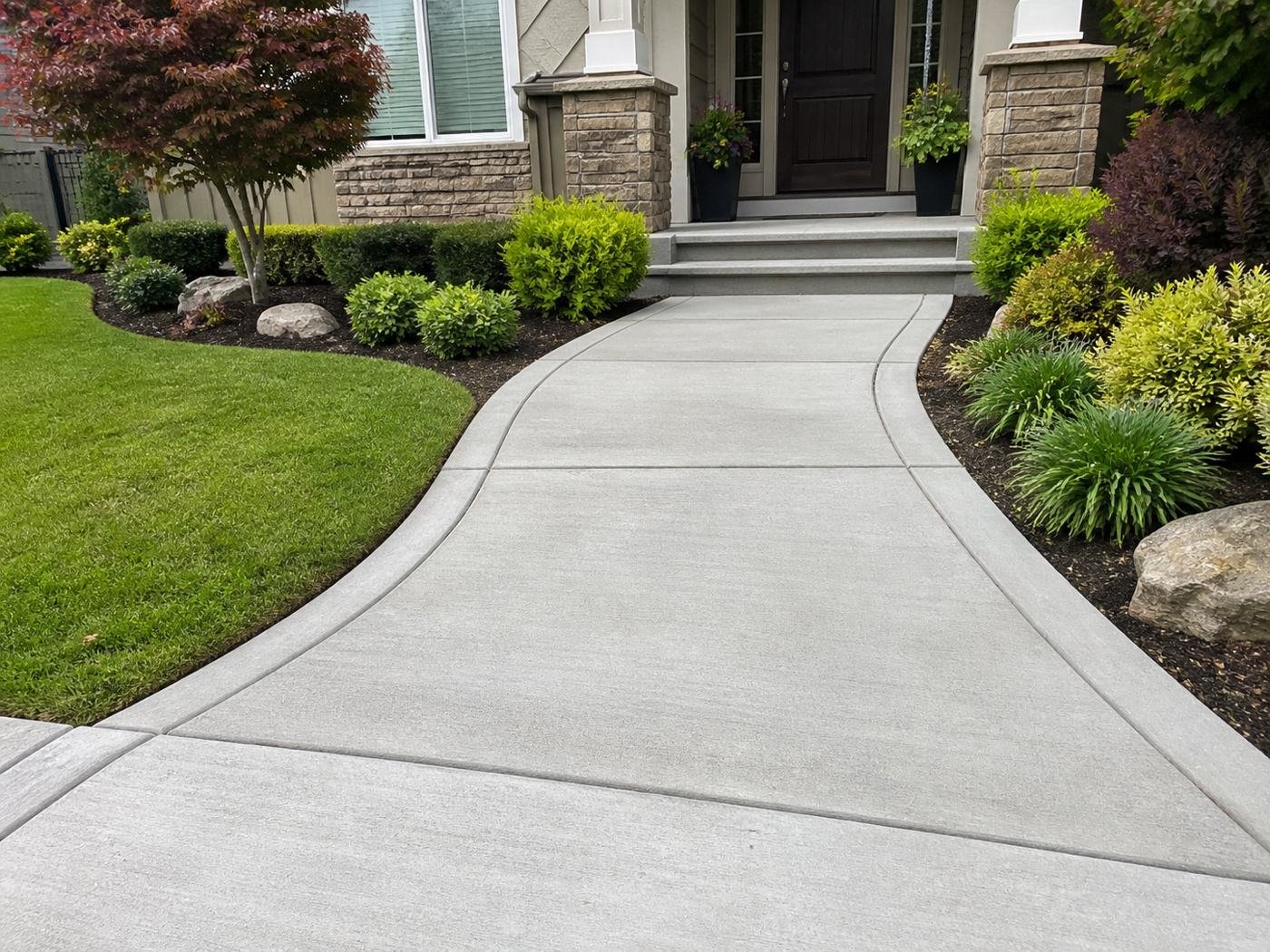
A commercial parking surface that handles daily vehicle loads and KC winters.
Concrete parking lots outlast asphalt significantly in north KC's freeze-thaw climate and don't require the periodic sealing and patching that asphalt demands. The upfront cost is higher; the 30–40 year service life with minimal maintenance often makes concrete the better long-term investment.
Request Free Estimate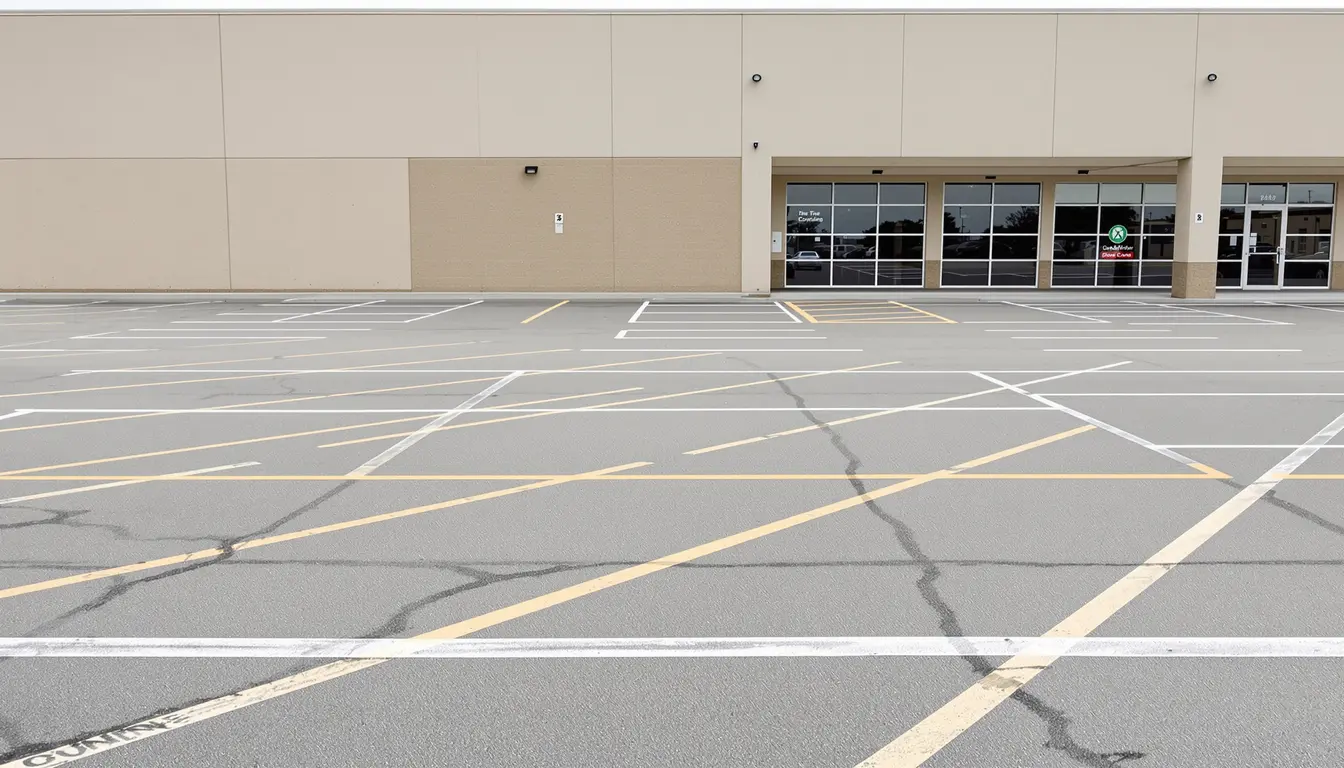
Service Overview
What commercial parking lot concrete includes
Concrete parking lots are typically poured at 5–6 inches thick for standard passenger vehicle traffic, and 6–8 inches for heavy truck or delivery traffic. The project includes sub-base preparation, forming, the pour, control joint sawcutting, and any curb or gutter work at the perimeter.
We evaluate each commercial parking lot project individually. Scope, site conditions, drainage requirements, traffic loading, and construction timeline are all assessed before we commit to a project.
Common reasons for this service
- New commercial property parking area. Pouring a concrete parking surface for a new commercial development, expansion, or property improvement.
- Replacing failing asphalt. Asphalt parking lots in north KC require ongoing maintenance — sealing, crack filling, and eventually overlay or replacement. Converting to concrete provides a longer service life.
- Expanding existing parking. Adding parking area to an existing lot — connecting to existing concrete or asphalt.
- Improving commercial frontage presentation. A clean concrete parking surface improves the appearance of a commercial property significantly compared to deteriorated asphalt.
- Adding ADA accessible spaces. Pouring or upgrading designated accessible parking spaces with appropriate slope, marking, and access aisle concrete.
What Matters
The technical factors that determine whether this project lasts.
These aren't variables that show up on a finished surface — they're what's underneath it.
Traffic load and thickness
Passenger vehicle lots are typically 5–6 inches. Lots carrying frequent truck or delivery traffic require 6–8 inches. Using the wrong thickness for the load creates early cracking.
Drainage design and slope
Commercial parking lots need to drain without ponding — both for functionality and to prevent accelerated concrete deterioration from standing water.
Sub-base preparation
Adequate sub-base compaction is critical for commercial slabs carrying vehicle loads. Weak sub-base leads to slab cracking and slab failure under repetitive loading.
Control joint layout
Joints in commercial parking slabs need to be laid out at appropriate spacing for the slab thickness — typically 15–20 feet for a 6-inch slab.
Curb and gutter integration
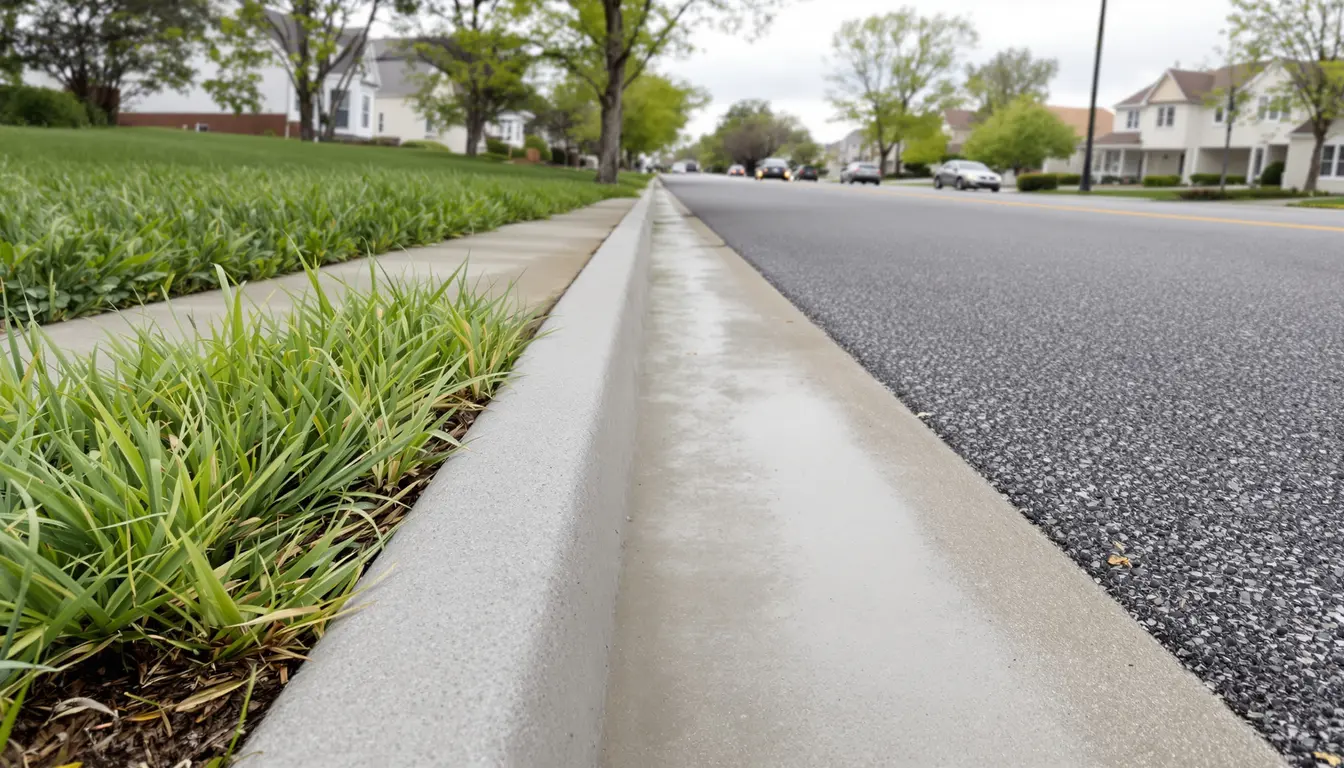
Parking lot perimeter curbing contains the slab, manages water flow, and protects the slab edge from vehicle damage and erosion.
North KC Conditions
How Gladstone's soil and climate affect parking lots.
Freeze-thaw on commercial surfaces
Commercial parking lots in north KC face 30–40 freeze-thaw cycles annually plus heavy deicer use. Concrete handles these conditions better than asphalt long-term, but requires appropriate mix spec and control joints.
Clay sub-base variability
North KC's clay sub-base can vary significantly across a parking lot footprint. Sub-base preparation and compaction testing are important for commercial loads.
Spring thaw and drainage demand
KC's spring thaw period puts high drainage demand on parking lot surfaces. Drainage design needs to handle peak spring rainfall without ponding.
The Process
From your first call to the finished project.
Submit project details
Provide approximate size, location, traffic type, and any existing surface conditions.
Site visit and assessment
We assess the site, sub-base conditions, drainage, and project requirements.
Scope evaluation
We assess whether the project fits our current crew capacity and timeline. We'll tell you clearly if it doesn't.
Written estimate
Written scope with thickness spec, sub-base requirements, joint layout, and fixed price.
Pour and completion
Sub-base prepared, forms set, concrete poured and finished, joints sawcut, curb work completed.
FAQ
Common questions about parking lots in Gladstone, MO.
Concrete vs. asphalt for a parking lot — which is better?
Concrete has a higher upfront cost but typically lasts 30–40 years with minimal maintenance. Asphalt costs less initially but requires sealing every 2–5 years and periodic overlays. In north KC's freeze-thaw climate, concrete's resistance to thermal cycling and deicer damage gives it a long-term cost advantage in most situations.
How thick should a commercial concrete parking lot be?
Standard passenger vehicle parking lots are typically 5–6 inches. Lots that handle regular delivery trucks, semi-trucks, or heavy equipment should be 6–8 inches. The appropriate thickness is determined by expected traffic loads and frequency.
Can you add concrete over existing asphalt?
Concrete bonded overlays over asphalt are technically possible but not recommended in most commercial situations. The existing asphalt condition and bonding requirements make this complex. Full removal and proper base prep produces a more predictable long-term result.
What about ADA requirements for parking lots?
Accessible parking spaces, access aisles, and routes to building entrances must meet ADA requirements for slope, surface condition, and dimensions. We can address ADA-compliant spaces and routes as part of a parking lot project.
How long does commercial parking lot concrete last?
Properly installed commercial concrete parking lots in north KC typically last 30–40 years. The main variables are sub-base preparation quality, concrete mix spec, control joint layout, and drainage. Concrete outperforms asphalt significantly in this climate.
Serving north Kansas City
Ready to discuss your commercial concrete project?
Free estimates for parking lots across Gladstone and north Kansas City.